
The Rise of Digital Twins: How Virtual Replicas Are Transforming Real-World Operations
Blog Introduction
Imagine being able to examine a machine inside a factory, test a change to a building's energy system, or evaluate a production process without immediately making changes to the physical environment.
This is the foundational idea behind digital twins.
A digital twin is a virtual representation of a physical object, system or process that is connected to real-world information. Depending on its purpose, it can reflect current operating conditions, track changes over time and help engineering and operations teams understand how a complex system might behave under different circumstances.
The concept goes far beyond simply creating a three-dimensional CAD model on a computer. A truly useful digital twin combines a digital representation with relevant telemetry, operational context and, in more advanced implementations, analytical simulation or predictive capabilities.
What makes this technology compelling is its potential to fundamentally change how businesses observe, manage and optimize the physical world.
Quick Summary: Digital twins bridge the physical and virtual worlds by pairing real-time IoT sensor telemetry with digital models. They allow enterprises to monitor physical assets, run predictive maintenance simulations, optimize building operations, and forecast supply chain dynamics without disrupting real-world operations.
Main Article
From Static Models to Living Digital Systems
For many years, digital models have been used in engineering, architecture and product design. They help professionals visualise structures, examine dimensions and understand how components fit together.
However, a traditional model usually represents a design or a particular point in time. It does not automatically reflect what is happening to the physical object after it has been built or deployed.
A digital twin can go further.
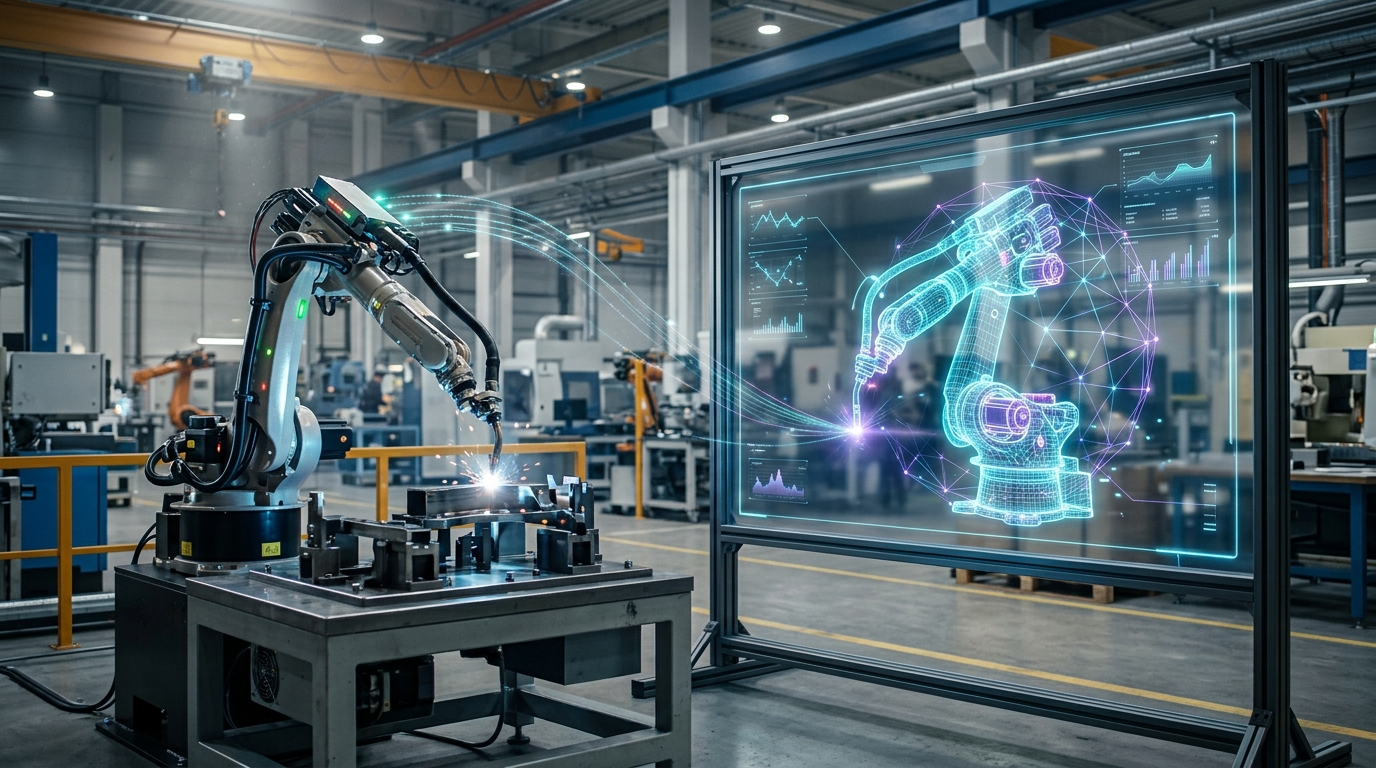
Consider a manufacturing machine operating on a production floor. Sensors may collect information about temperature, vibration, operating speed and energy consumption. A connected digital model can use this information to represent the machine's current condition in real time.
Engineers can then examine operating patterns, investigate unusual changes and evaluate possible adjustments.
The physical machine continues doing its job, while its digital counterpart provides another way to understand what is happening.
The important distinction is the connection between the physical system and the information used to represent it.
A digital model shows what something looks like. A digital twin can help explain how the real system is operating.
Key Distinction: A traditional digital model shows what something looks like. A digital twin explains and demonstrates how the real system is currently operating and predicts how it will perform under changing conditions.
How Does a Digital Twin Work?
A digital twin is not a single technology. It is a system made up of several components that work together:
1. The Physical Asset
Everything begins with something that exists in the real world. It could be a machine, vehicle, building, production line, energy system or even a larger operational environment.
2. Data Collection
Sensors, connected devices, existing business systems and manual inspections can provide information about the physical asset. The type and frequency of data depend on what the twin needs to represent.
For example, a building's digital twin may use information about temperature, occupancy, energy consumption and equipment performance.
3. Data Processing and Connectivity
The collected information must be transferred, organised and processed. Software systems, communication protocols, databases and cloud or edge infrastructure can all play a role.
Reliable data matters because an inaccurate or delayed representation can lead to misleading conclusions.
4. The Digital Representation
The data is connected to a digital representation of the physical asset or process. This may include a 3D model, a dashboard, a system diagram or a more complex engineering model.
The right representation depends on the problem being solved. Not every digital twin needs an impressive 3D visualisation.
5. Analysis and Simulation
Once the system has relevant data and an appropriate model, users can examine performance, identify patterns and test selected scenarios.
For example, an engineering team might evaluate how a change in operating conditions could affect a machine. A building manager might compare different temperature settings to understand their potential impact on energy use.
Some digital twins simply monitor and display information. Others support advanced simulations, predictions or controlled interactions with physical systems.
The sophistication of the twin should match the actual business requirement.
Digital Twins in Manufacturing: Understanding Problems Before They Become Expensive
Manufacturing is one of the most practical areas for digital twin technology.
Production environments contain interconnected machines, maintenance schedules, energy requirements and quality-control processes. A problem in one part of the operation can affect several others.
A digital twin can bring relevant operational information into a shared view:
- Early Anomaly Detection: Suppose a production machine begins showing unusual vibration patterns. A connected system may help maintenance teams compare those readings with historical operating conditions and inspect whether the change requires attention.
- Predictive Maintenance: Rather than relying purely on fixed schedules or reacting to sudden failures, teams can use data-driven indicators to schedule maintenance before breakdowns happen.
- Process Optimization: Teams can test line reconfigurations, equipment adjustments, and process improvements virtually before rolling them out on the factory floor.
This does not guarantee that a machine failure can always be predicted. The result depends on sensor quality, available historical data, the accuracy of the model and the maintenance process itself.
Nevertheless, having better visibility into operating conditions can help teams investigate issues earlier and make more informed maintenance decisions.
Digital twins can also support production planning, equipment design, process optimisation and the evaluation of changes before they are introduced into a physical facility.
For manufacturers, the value lies in understanding how individual machines and larger production systems behave under real operating conditions.
Smarter Buildings Through Connected Digital Twins
Buildings are complex systems.
Heating, ventilation, lighting, electricity, occupancy and equipment performance all influence how a building operates. Yet this information is often distributed across separate systems.
A building digital twin can bring these data sources together to provide a more complete operational picture:
- Energy Management: Facility managers may use it to examine energy consumption, investigate temperature differences between areas, understand equipment performance or compare possible changes to building operations.
- Operational Simulation: For example, a building manager could evaluate how adjusting a ventilation schedule might affect energy use and indoor conditions. Depending on the implementation, the analysis could combine occupancy information, equipment data and engineering models.
- Targeted Monitoring: This can be particularly valuable for large offices, hospitals, commercial buildings and industrial facilities where operating costs and environmental conditions require continuous attention.
However, a digital twin is only as useful as the information and models behind it. Poorly integrated building systems or incomplete data can limit its effectiveness.
The objective is not simply to create a virtual building. It is to improve the management of the real one.
Digital Twins in Logistics and Supply Chain Operations
Modern supply chains depend on the movement of goods, vehicles, inventory and information across multiple locations.
A delay at one stage can affect delivery schedules, warehouse operations and customer commitments.
Digital twin approaches can help represent selected parts of this environment, such as a warehouse, a distribution network or a logistics operation:
- Warehouse Operations: By combining relevant information about inventory, equipment, vehicle movements and operating schedules, businesses can develop a clearer view of how their facilities are performing.
- Scenario Testing: What might happen if demand increases? How could a warehouse layout change affect material movement? What would be the operational impact of a delayed shipment?
- Proactive Coordination: Supply chain teams can examine operational relationships that are difficult to understand through isolated reports alone.
The answers depend on the quality of the underlying data and the scope of the model. A digital twin does not automatically know every condition across a supply chain, especially when information from external partners is unavailable.
Still, a well-designed system can help organisations examine operational relationships that are difficult to understand through isolated reports alone.
The Role of Software in Digital Twin Development
The visual model is only one part of the overall system.
Behind a functional digital twin, there may be a substantial software architecture responsible for data collection, communication, storage, processing, visualisation and access control:
- Web-based Dashboards: High-performance user interfaces for monitoring operational conditions in real time.
- Backend Services & Streaming Pipelines: Scalable architectures for receiving, normalizing, and processing high-frequency data.
- Database Systems: Hybrid databases for storing current operational state and decades of historical time-series logs.
- Integration Layers: Middleware for communicating seamlessly with existing enterprise systems like ERPs, CRMs, and supply chain management software.
- Visual Interfaces: 2D and 3D visual environments for exploring physical assets and their operational relationships.
- Access Controls & Security: Granular permissions ensuring that users see only the information and functions they are authorised to use.
In more advanced environments, simulation engines, analytical models and automated workflows may also be required.
These components must work together reliably. A visually impressive interface offers limited value if its data is inaccurate, delayed or disconnected from the physical system.
This is why digital twin development often involves more than 3D design. It requires a combination of software engineering, system integration, data architecture and domain-specific knowledge.
Digital Twins and the Industrial Internet of Things
The Industrial Internet of Things, commonly known as IIoT, connects industrial equipment and devices so they can exchange information and support monitoring or control activities.
Digital twins can use IIoT data to maintain a more current representation of physical operations:
- IIoT Role: Connected sensors report real-world metrics like a machine's temperature, vibration, or operating status.
- Digital Twin Role: The digital twin displays that information in context, allowing technicians to examine it alongside maintenance history, physical geometry, and simulation models.
However, IIoT and digital twins are not the same thing:
- IIoT focuses on connecting devices and collecting or exchanging data.
- A digital twin uses relevant information to represent, model, and understand a physical asset, process or system.
They can complement each other, but neither automatically requires the other in every implementation.
A business can benefit from connected-device monitoring without building a full digital twin. Likewise, a digital twin may use a combination of live data, historical records, engineering models and periodic measurements.
The right approach depends on the intended outcome.
Challenges Businesses Need to Consider
Despite its potential, digital twin technology is not a universal solution.
1. Data Quality: If sensors are unreliable, measurements are missing or systems use inconsistent formats, the digital representation may not accurately reflect the physical environment.
2. System Integration: Many organisations already operate equipment and software from different vendors. Connecting these systems can require custom interfaces, compatible communication protocols and careful data management.
3. Financial Justification & Costs: Sensors, infrastructure, software development, modelling and ongoing maintenance can require significant investment. A complex digital twin may not be financially justified for a simple operational problem.
4. Security & Cyber Governance: Connected systems can expose sensitive operational information and, in some environments, create pathways into industrial networks. Businesses need appropriate access controls, network segmentation, monitoring and security practices.
5. Lifecycle Maintenance: Physical assets change, equipment gets replaced, processes evolve and software is updated. The digital representation must be actively maintained if it is expected to remain reliable.
Successful projects begin with a clearly defined problem rather than an assumption that every asset needs a digital twin.
How to Identify the Right Digital Twin Opportunity
For a business considering this technology, the first step is to identify an operational problem that is difficult to understand using existing tools:
- Perhaps equipment downtime is expensive.
- Perhaps energy consumption is difficult to explain.
- Perhaps a facility has multiple systems that do not provide a unified view of operations.
The next step is to determine what information is available, which additional data would be needed and how a digital representation could help answer the relevant questions.
It is often sensible to begin with one asset, one process or one facility.
A focused pilot allows the organisation to test data quality, integration requirements, usability and measurable business value before expanding the system.
The success of a digital twin should be evaluated through practical outcomes, such as improved visibility, better maintenance planning, more efficient resource use or faster investigation of operational problems.
The technology should justify its place in the business through the decisions it helps people make.
The Future of Digital Twins
Digital twin technology is developing alongside advances in connected devices, cloud infrastructure, simulation, visualisation and data processing.
As these capabilities improve, organisations may be able to represent increasingly complex systems and examine relationships across equipment, facilities and wider operations.
A factory digital twin, for example, could eventually form part of a broader representation that includes production planning, energy use, maintenance and material movement. A city-scale digital twin may combine information about transport, buildings, utilities and environmental conditions.
These applications are complex, and their usefulness depends on reliable data, suitable models, effective governance and clear operational objectives.
The long-term opportunity is not simply to create more detailed virtual environments.
It is to give people a better way to understand how real-world systems behave, how different decisions may affect them and where improvements are possible.
Conclusion: Connecting the Physical and Digital Worlds
Digital twins represent an important development in the relationship between software and the physical world.
They can connect data from real assets with digital representations that support monitoring, analysis, simulation and decision-making.
Their applications range from individual machines and commercial buildings to manufacturing processes and complex infrastructure.
But their value does not come from visualisation alone. It comes from combining useful data, reliable software, appropriate models and a clear understanding of the problem being addressed.
For businesses, the most practical starting point is not to ask whether they need a digital twin because it is an emerging technology.
It is to ask whether a better digital representation of a real-world system could help them make better decisions.
When that connection creates measurable value, a digital twin becomes more than a virtual copy.
It becomes a practical tool for understanding and improving the real world.
Final Thought
The next stage of digital transformation is not limited to moving business activities onto screens. It also involves creating stronger connections between physical operations and the software used to understand them.
Digital twins are one way this connection is taking shape, bringing real-world information into digital environments where people can explore, analyse and improve complex systems.
The opportunity is not to replicate everything.
It is to understand the right things more clearly.
When that connection creates measurable value, a digital twin becomes more than a virtual copy. It becomes a practical tool for understanding and improving the real world.
Ready to connect your operational assets with real-time digital intelligence? Schedule a consultation with Sanmora's engineering team today to design custom digital twin and IoT architectures built for scale.
Frequently Asked Questions
Do businesses need to deploy digital twins across their entire enterprise at once?
No. The most successful implementations begin with a targeted pilot—focusing on a single high-value machine, critical workflow, or specific facility problem—before expanding into broader operational networks.
How do IoT devices and digital twin software interact?
IoT sensors and connected hardware capture live operational metrics (temperature, vibration, pressure, energy usage) and stream them into the digital twin software platform, which maps the data against digital models for simulation, predictive maintenance, and operational analytics.